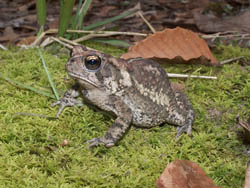
Woodhouse’s Toad, Anayxrus woodhousii
The Collection of Amphibians and Reptiles contains over 98,000 cataloged specimens collected since 1936. The cataloged specimens in the collection document the historical and current distribution, variability, and natural history of reptiles and amphibians across their ranges, and contribute much to our knowledge of our shared environment. It is the largest collection of Texas amphibians and reptiles, with over 45,000 specimens from all areas of the state. Holdings from Latin America are extensive, totaling 36,361 specimens, with particularly strong collections from Mexico, Peru, Venezuela, and Argentina. Our database may be searched by clicking here.
The holdings represent well the diversity of amphibians and reptiles worldwide, adding to the research and didactic value of these collections. There are representatives of all existing orders of reptiles and amphibians, 102 families, 656 genera, and 2,418 species, including 37 holotypes and 868 paratypes. In addition to fluid-preserved specimens, the collection contains genetic samples and skeletal preparations.
Research projects and field courses directed by Curator Emeritus Dr. James R. Dixon provided most of the specimens, and the collections continue to grow based on research, teaching, and networking with other institutions. The collection recently acquired the reptile and amphibian collections of Midwestern State University, The University of North Texas, The Whitte Museum, and the Houston Museum of Natural Science.
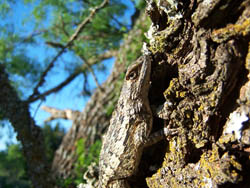
Texas Spiny Lizard, Sceloporus olivaceus
The Collection of Amphibians and Reptiles is used extensively locally and internationally for biodiversity research and education. The collection database is accessible via the Internet, and is part of HerpNET, an effort funded by the National Science Foundation to network the nation’s herpetological collections. A current NSF grant supports making specimen data compatible with web-based biodiversity mapping systems. The Collection is currently partnered with the Texas Alligator Task Force, the Houston Toad Task Force, the US Fish and Wildlife Service, Texas Parks and Wildlife Department, Turtle Survival Alliance, the Bureau of Land Management, New Mexico Department of Game and Fish, and the National Science Foundation in projects that involve the study of reptiles and amphibians.